Am I Beautiful? How Digital Seizures are Stealing Our Children’s Identity
Sep 01, 2026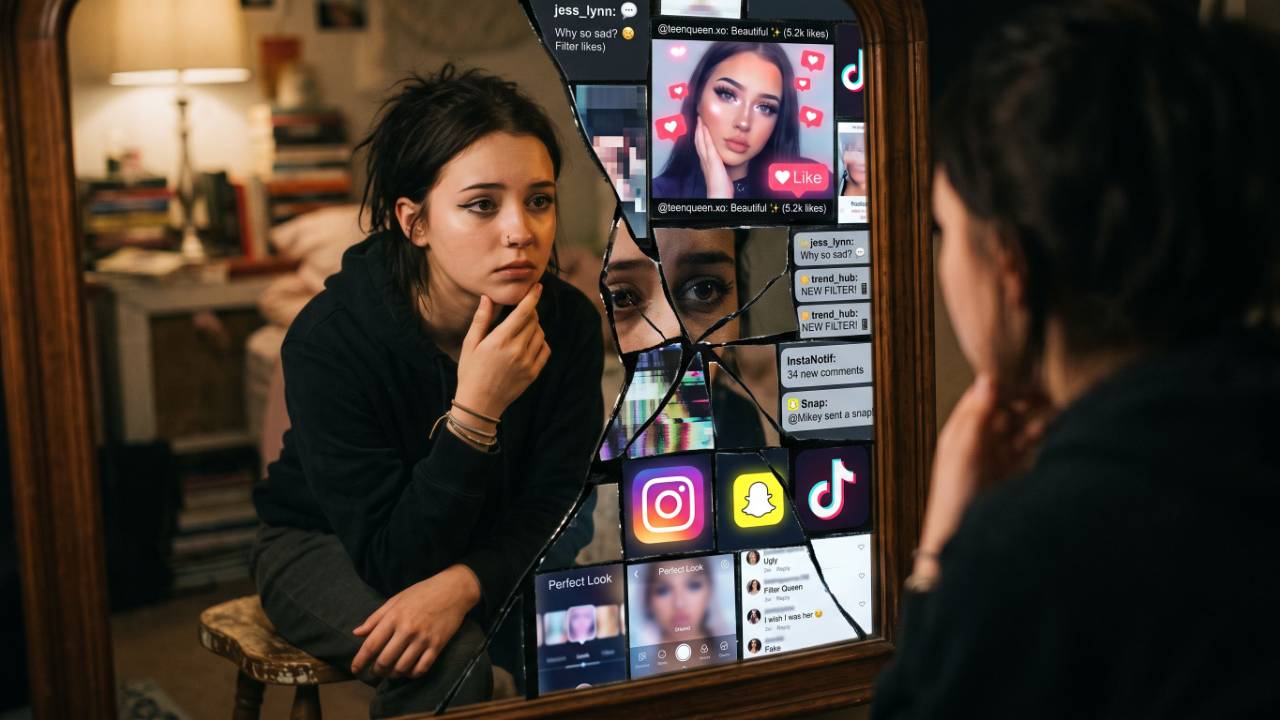
One night, I had a sad dream about one of the young ladies from the church I attend. She was part of the teenage group of girls that my wife had been assigned to work with as their youth leader. She was a pretty girl who seemed to be the ringleader of her group of friends, most of whom seemed to constantly have their phones out in front of them. I remember seeing her, years earlier, as a little girl in the children’s singing class and thought she was adorable and looked as sweet as could be.
A Question That Haunts Our Kids
Now, her countenance was different; she has changed styles over the years to include dark colored apparel, long eyelash extensions and a nose ring. Her demeanor seems to reflect both confidence and defiance. However, in my dream that night, she seemed to be much smaller physically than she really was - almost shrunken in a weird dreamlike sort of way. She was looking up at me with her big sad eyes, and exhibited an overwhelming amount of doubt and uncertainty, as she eagerly yearned to get an answer to a question that was bringing her so much dismay. Almost pleadingly, she then asked the question, “Am I beautiful?”
In that moment, she wasn't just asking a question; she was experiencing what I call a Digital Seizure. Just as a physical seizure causes a brain to lose its connection to reality, this girl had lost her connection to her inherent worth. Her reality was being 'seized' by the filtered, curated images on her screen, and in the process, she lost the ability to see herself as she truly is.
Seeking Verdicts: The Screen vs. The Mirror
As a teenager, I remember memorizing the poem, The Man in the Glass, by Dale Wimbrow (1934). It contained an important message that I have repeated in my mind many times since. Here are some of the verses of that poem:
When you get what you want in your struggle for self
And the world makes you king for a day
Just go to the mirror and look at yourself
And see what that man has to say.
For it isn’t your father, or mother, or wife
Whose judgment upon you must pass
The fellow whose verdict counts most in your life
Is the one staring back from the glass.
He’s the fellow to please – never mind all the rest
For he’s with you, clear to the end
And you’ve passed your most difficult, dangerous test
If the man in the glass is your friend.
You may fool the whole world down the pathway of years
And get pats on the back as you pass
But your final reward will be heartache and tears
If you’ve cheated the man in the glass.
We are training our children to seek their verdict from the 'glass' of a screen—where the audience is infinite, anonymous, and often unkind. We must instead teach them to seek it from the 'glass' of a mirror—where the only opinion that matters is their own, guided by faith and character. The battle for their self-worth is being fought in the split-second between looking at a notification and looking at themselves
This poem causes us to reflect on our self-image. Who do you see when you look in the glass? First and foremost, our kids need to know that they matter, they’re important, and that they are a son or daughter of God. They may not see that when they look at themselves on the glass hung on the wall, or even more likely, how they portray themselves to others through the glass of their phones. So, the question for them and each of us—which can be difficult to ask—is who do you see? After all, “The fellow whose verdict counts most in your life is the one staring back from the glass.”
The Business of Seizing Attention
The problem is that the screen is not designed to let you find that friend in the mirror. This model of indicating ratings or likes can be found across the internet on just about any social media platform; and it’s by no coincidence. It’s a business tactic. And it works.
Unlike other business models which involve doing everything possible to improve their services and offerings, social media companies take the approach of hooking their customers in the best interest of the business and not that of the actual customers. And unfortunately it can lead to anxiety, depression and a sense of low self-worth.
The Mirror Check: A Strategy for Parents
If you see your child’s countenance changing—becoming smaller, more uncertain, or more 'shrunken' as I saw in my dream—look for the 'Digital Seizure.' Are they losing eye contact? Are they repeating self-defeating phrases while scrolling? Are they seeking validation from the screen instead of finding it in their own reflection?
Your Action Step: This week, practice “The Mirror Check.” Ask your child to put the phone down, and then ask them: “How are you doing? How do you see yourself?” It’s a simple exercise, but could lead to some important discoveries. It not only helps you identify some areas where you could provide support, but can help your child see how awesome they really are!